
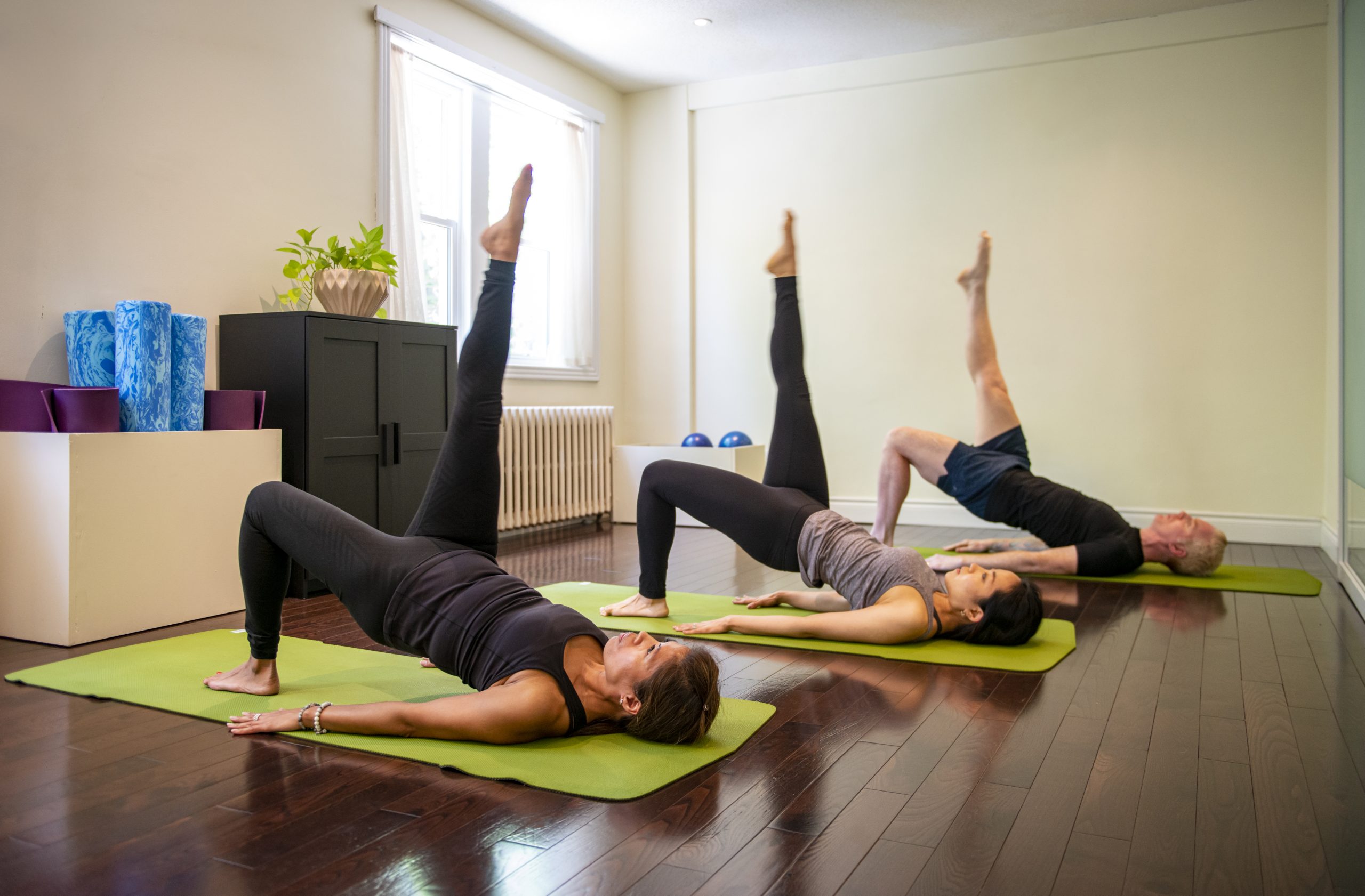
I don’t get to teach Pilates group classes frequently, so when the chance comes, I take it because I love to meet studio clients and it gives me the opportunity to program differently than private Pilates sessions 😉
Teaching group classes can be challenging – no doubt about it. But if you prepare properly, it can also be extremely rewarding.
It’s all about being able to think quickly, pivot your programming and adapt for your clients. Because there are always going to be clients who have different abilities, limitations and Pilates experience in the classes you teach – no matter how specific your group class descriptions and levels.
Pilates education programs will give you the tools to teach group classes. But it’s not until you’re up front teaching and seeing the variety of movement ability in your Pilates class that you’ll want to prioritize programming prep. Because it’ll make it soooo much easier to teach. And a no-brainer for your clients to keep signing up each week.
Ready to be INSPIRED? Sign up for the FREE Pilates Newsletter for Instructors.
- Strategy: Set High Level Goals
Here are 3 strategies to keep your mixed level Pilates classes on track.
In The Pilates Resource Catalogue we talk a lot about setting goals because it keeps your workouts focused and intentional.
When you’re training a mixed level group, setting a high level goal is a great way to design your workouts. And letting your participants know what that goal is at the beginning of class will keep them engaged and excited about the progressions.
Make your goal either exercise based or self-awareness based and design your workouts to work towards achieving it.
Here’s a quick outline of what both might look like:
Exercise Based:
- Pick an exercise at a higher level on either the Mat or Apparatus.
- Quick reminder! It’s not about achieving this exercise in a single class but working towards it over several classes.
- Figure out what programming strategies are needed to do that exercise well.
- Make a list of the Pilates exercises that complement those strategies.
- Include appropriate supplementary exercises to add workout variety and accessibility and still focus on the goal.
Self Awareness Based:
- Pick one general area that everybody needs to improve. For example;
- Stronger posterior shoulder girdle muscles to help with neck and head placement
- Strengthen the feet and ankles to improve dexterity for balance and proprioception
- Strategy: Structure your workout to align with your goal.
Now that you’ve selected a high level goal to focus on, determine how you’d like the workout to begin.
For example, if you’ve chosen a postural issue, it might make sense to begin the class with standing exercises that get your participants focusing on the key area.
From there, group 3-4 exercises that can be done standing before moving the class into a different position such as sitting, kneeling, lying supine or prone before ending the class in a position that reiterates your workout goal; for example, perhaps an upright movement like the Reformer Side Splits or Cadillac Arm Springs Standing.
A workout structure that moves participants through key positions is a great way to keep your class organized and the workout flow top of mind.
Quick programming tips:
- In each position select exercises that can regress/progress.
- Use both Pilates and supplementary (non-Pilates) exercises to inform, strengthen and move your clients.
- In each position, remind your class of the high level goal that you’re focusing on with exercises that emphasize the connection you want them to make.
- Strategy: We can all use a little improvement.
Regardless of a client’s Pilates experience, everyone (and that includes instructors!) can always benefit from a reminder, modification, correction or informative tip.
I have found that to keep the class engaged, inclusive and moving, it’s better to teach the entire class a cue or correction rather than focus on the individual for whom it’s meant.
Because chances are, there are others that will also connect with my correction and cues. And the added bonuses of this approach are:
- No one feels uncomfortable or frustrated by being set out from the class
- It allows participants to have more independence and autonomy in their workout.
- It strengthens both listening and self awareness skills so clients can apply what they’re learning into their movement.
It doesn’t matter whether you’re teaching 2 people or a group of 20. Teaching Pilates to more than one person at a time is hard. Period.
By taking the time to prepare and organize your workouts, you’ll stay in control of the session and look forward to each class on your schedule!