For nearly 30 years, I’ve had the privilege to teach Pilates to many different bodies and movement abilities.
And I’ve learned through trial and error 😉 that a traditional Pilates workout is not always enough to progress clients to the more challenging Pilates repertoire.
This is where supplementary exercises, like the one below, become indispensable programming tools.
What are supplementary exercises, you ask?
Let’s start with what they aren’t: supplementary exercises aren’t traditional Pilates exercises or modifications that you might’ve learned in your Pilates training.
And they aren’t exercises done on the Pilates equipment to showcase flexibility and choreography.
In fact, many of them are done with minimal Pilates equipment and almost all of them can be found outside of the Pilates paradigm.
These are exercises that I have used as building blocks because they have supplemented my clients’ workouts to effectively develop strength, mobility and endurance plus developing the awareness and mind-body connection that is needed to do many of the advanced level Pilates exercises.
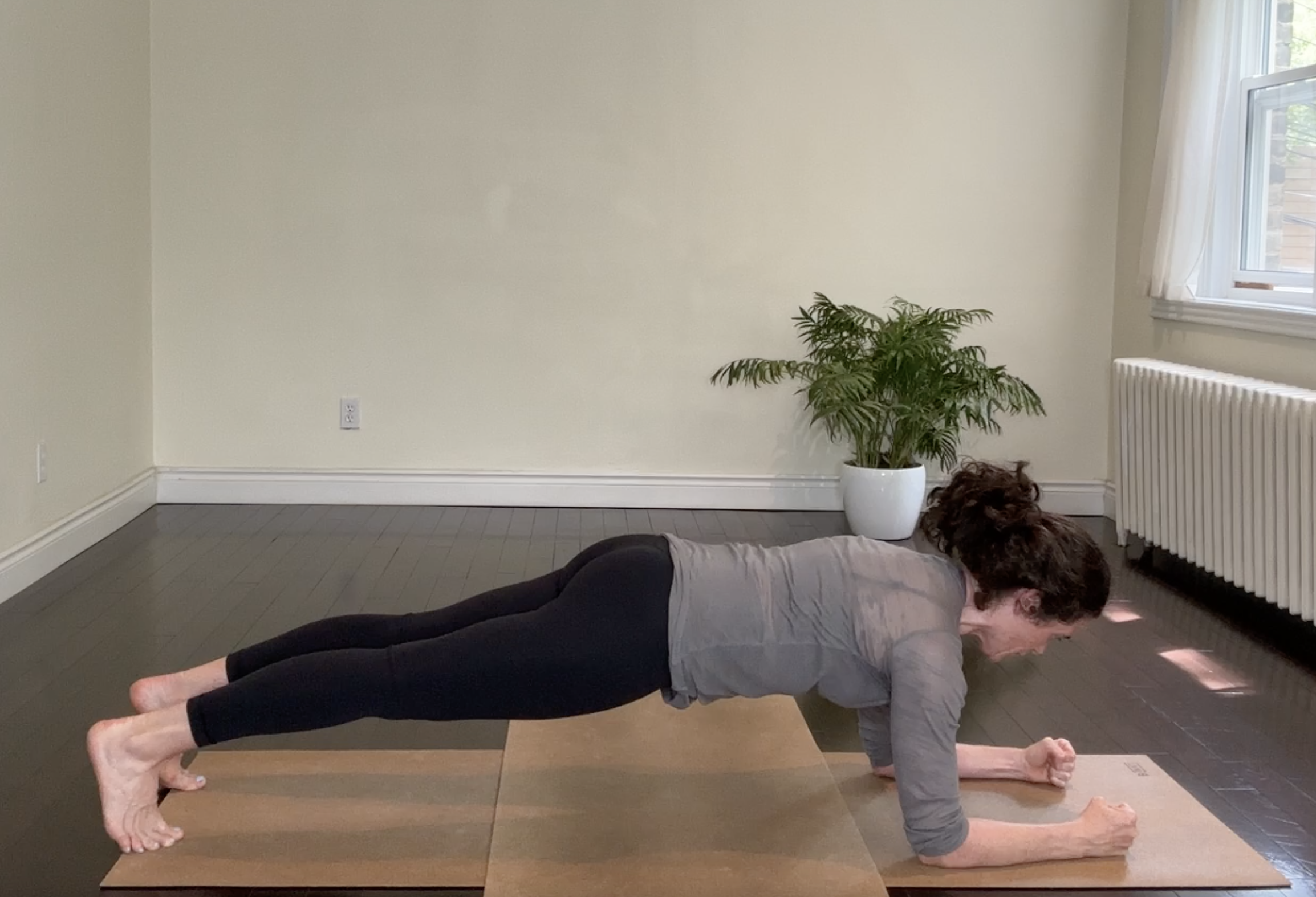
For example, this exercise that I’m demonstrating below; it’s not a classical Pilates exercise, but it has become an indispensable tool to help move my clients into the classical Pilates repertoire.
The engagement of the entire body, from head literally right down to the active, dorsi flexed ankles, not to mention the demanding strength on the shoulder girdle, obliques, hip extensors and adductors has helped clients with the following exercises:
- Snake on the Reformer
- Mat, Chair, Reformer Twists
- Reformer Star
- Leg Pulls Front and Back
- Reformer Controls Front and Back
- Mat Side Bends
Teaching the more challenging Pilates exercises is more than just knowing the movement.
We want to be able to engage our clients with an understanding of what the exercise demands from them physically and mentally.
Using supplementary exercises as building blocks in our workouts means we’re developing better movement awareness and mind-body connections for our clients.
And as instructors, it means we’re expanding our Pilates teaching toolkit by learning how to teach instead of just what to teach.
#PilatesTeachingTips #PilatesEducation #MovementEducation